
微博
Chinese firm’s Lixun-1 ‘space tug’ eyes maiden flight in Q1 2027 after key propulsion tests_我的网站

一 |
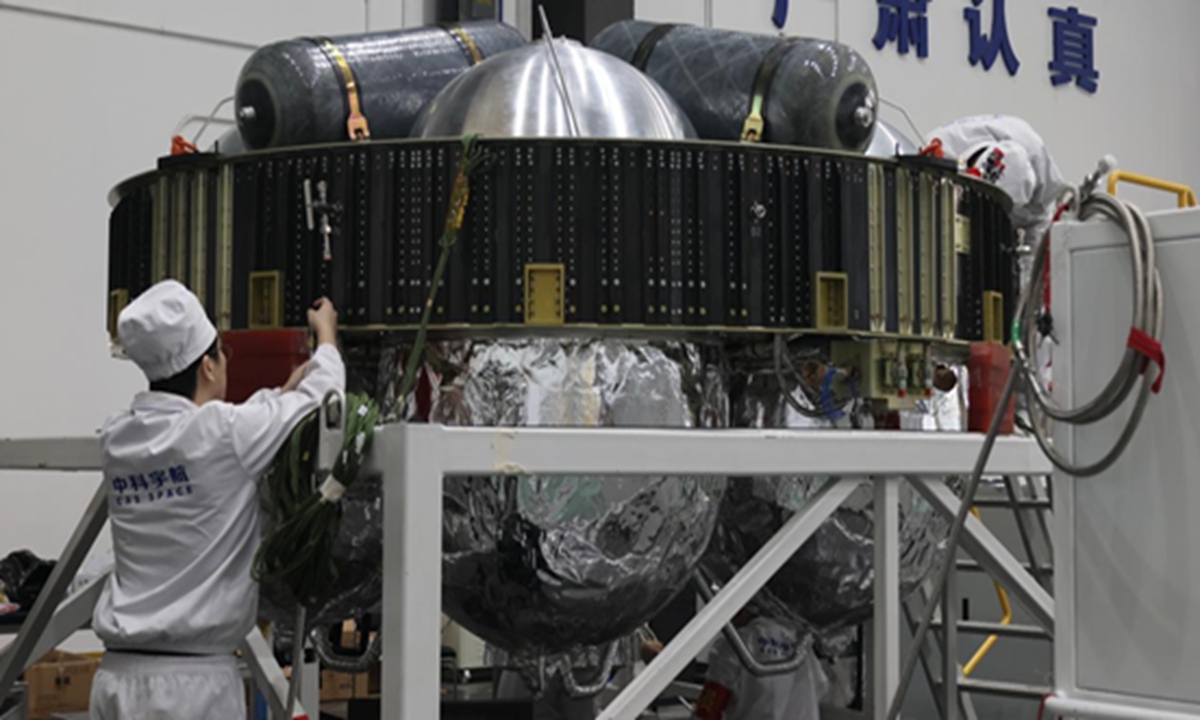
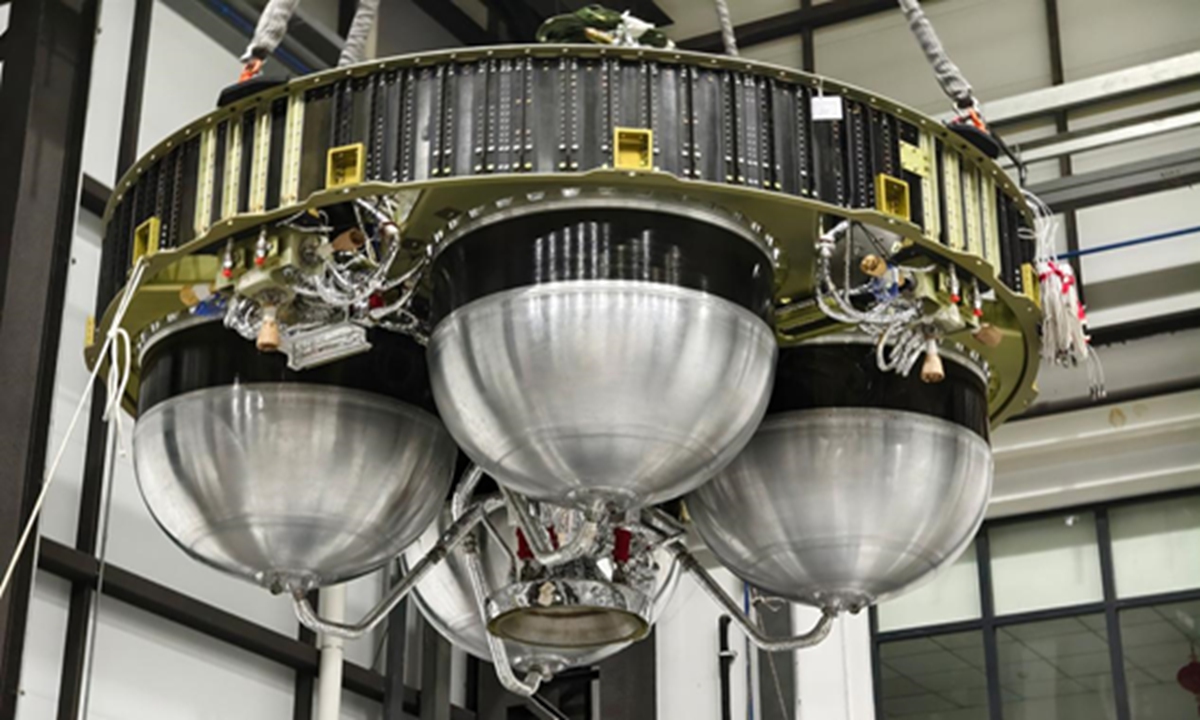
Lixun-1 upper stage, a versatile "space tug" developed by China's commercial space firm CAS Space, is scheduled to make its maiden flight in the first quarter of 2027 after completing a series of key propulsion-system tests, the developer and its chief designer told the Global Times on Tuesday.
The "tug" is designed to ferry satellites from one orbit to another and support missions ranging from constellation deployment to lunar exploration.
While the main stages of a rocket carry payloads from the ground into an initial orbit, an upper stage takes over once the craft is in space. By repeatedly restarting its engine and changing orbit, Lixun-1 can deliver satellites to higher or different orbits, distribute multiple spacecraft to separate destinations during a single launch, or send probes onto trajectories toward the moon and beyond, Global Times learned from the developer.
Yang Haoliang, chief designer of the Lixun-1 upper stage, compared the system to a shuttle service. "If the regular stages of a launch vehicle are like a long-distance bus," - they carry the upper stage and satellites from Earth to a near-Earth parking orbit - the upper stage then takes over as a "space tug," carrying its satellite "passengers" onward to their designated orbital "stops," Yang explained.
That capability can have a direct impact on how efficiently satellites are launched and operated, Yang said. If a satellite has to climb from an initial orbit to its final destination using its own engine, the process can consume a considerable amount of onboard propellant and reduce the fuel available during its operational life. An upper stage can instead perform that orbital transfer, helping conserve satellite fuel and potentially extend its service life.
It can also make one rocket launch do more work. Instead of releasing a batch of satellites into roughly the same orbit, Lixun-1 can repeatedly ignite its engine and maneuver between deployments, sending different satellites to different altitudes and inclinations. Yang said this would help accelerate constellation deployment while improving the efficiency of individual launches.
The practical ambitions behind the system are backed by a major technical milestone reached this month. In August, Lixun-1 completed its PV-001 integrated propulsion-system coordination firing test, during which the entire system operated smoothly for 566 seconds.
Yang told the Global Times that the current Lixun-1 upper stage has a thrust of 20 kilonewtons and can achieve a specific impulse of 315 seconds, which he described as reaching an internationally leading level. The August firing covered the planned profile for the maiden mission, an important step before the system proceeds to flight testing.
The test was more than a demonstration of the engine itself. As an important system-level verification during development, it examined the coordination and engineering reliability of the engine pressurization system, propellant delivery system, propellant management system and servo-control system under the fully integrated configuration.
Of a series of tests that accumulated 5,211 seconds of firing time, the latest one focused on three core technologies: a high-thrust, high-performance 20-kilonewton upper-stage engine capable of multiple starts; balanced propellant delivery from multiple parallel tanks; and a highly reliable integrated electrical system. Their successful verification means Lixun-1 has completed its system-level testing and is ready to move into the flight-test phase, according to the developer.
Lixun-1 has been designed as a modular and generally adaptable upper stage rather than a system tied to only one rocket. It is intended to work with CAS Space's Kinetica-2 and Kinetica-2 heavy-lift variants as well as other launch vehicles, Yang said.
When paired with the Kinetica-2 family, Lixun-1 could significantly expand the rocket's mission range. For communications missions, it could deliver satellites to geosynchronous transfer orbit or even directly to geosynchronous orbit, conserving satellite propellant while supporting the deployment of high-throughput satellites and future 6G communications spacecraft.
For multi-satellite missions, the combination could distribute spacecraft to different orbital altitudes and inclinations during a single launch, potentially serving both low-Earth-orbit constellations and medium- or high-orbit payloads. For deep-space missions, it could place probes onto Earth-moon transfer trajectories and support lunar exploration, Yang said.
The upper stage is designed to be able to conduct more than 20 engine ignitions, autonomously plan orbital-transfer routes and operate under the vacuum and extreme temperature conditions of space. After completing payload deployment, it can also carry out orbital disposal maneuvers to reduce space-debris risks.
Yang said the Lixun-1 and Kinetica-2 combination is designed to cover the vast majority of commercial satellite launch requirements while retaining the ability to participate in major national space projects. More broadly, the upper stage forms part of CAS Space's effort to build launch capabilities reaching medium and high Earth orbits and deep space, extending the reach of China's commercial space sector toward higher orbits and more distant destinations.
。1月11日,亚马逊推出了英特尔的六核i5-9400f台式机处理器,它缺少集成显卡,属于Coffee Lake Refresh家族,使用该公司的14纳米技术制造。核心I5-9400F CPU有六个核心,无超线程,频率2.9-4.1 GHz,包含9 MB L3缓存,支持DDR4-2666内存,额定功率为65 W TDP。酷睿i5-9400F是英特尔的入门级台式电脑六核处理器,因此它将成为最便宜的六核CPU之一。在发布时,亚马逊的价格是208.38美元,约1400元人民币,但该芯片暂时缺货。在CES上,英特尔还以低调的方式发布了几个非核心显示CPU。

二 | 有关更多详细信息,请参阅以下文章:英特尔6台式处理器曝光:i5-94005非核显示CPU和三个英特尔第9代CPU曝光:奔腾G5420即将面世。
Current article:http://wg8da.zhuaicaisaanzhenshunnaiwei.bond/e20/20260826/4518.html
Published on:00:00:00
我的网站相关阅读
- 特斯拉回应近300万辆召回:无需全部进店,贴纸3年内随时可领
- vivo韩伯啸:全新X500系列9月亮相,全系3杯,“电影级视频”成亮点
- Prices in West Bank Continue to Soar; Local Employee Says Palestinians Can Hardly Make Ends Meet
- 2026款瑞虎7高能版、瑞虎7 PLUS将于6月17日上市 配置、动力升级
- 摩尔线程公布万卡级集群训练成绩 称国产芯片可训出前沿模型
- Duleep Trophy 2025: शेड्यूल, स्क्वॉड से लेकर लाइव स्ट्रीमिंग तक; एक क्लिक में पाएं सारी जानकारी
- 冲刺四季度|抚顺县:高质高效打好全年“收官”战
- 财政部第二次续发行2026年记账式附息(十三期)国债
- 受苹果iPhone需求的影响,富士康2018年12月的收入同比下降8%。
我的网站最新文章
- China advances global AI governance on all fronts, turning principles into deeper, more concrete action
- 新政府重拳打击犯罪,囚犯将大幅增加,但监狱里住不下了……
- 公牛的魔鬼来了!丰田新跑车supra正式发布
- 完成上一代人的遗憾:索尼X800m2蓝光播放器最终支持杜比的地平线
- China's factory-built buildings find growing markets overseas
- 2025国补什么时候开始到什么时候结束?国补和618哪个更便宜可以叠加吗?国补政策最新消息确定
- 智能拳击手套和沙袋可用于每月订阅费用
- 建昌县雷家店乡:防汛责任精准落实到人
- 我国建成1000余家国家级、4500余家省级绿色矿山
- 伊利股份:上半年归母净利润57.59亿元,同比下降20.02%
- 他们在力主让德约参加美网
- 中国男篮出征世预赛名单:崔永熙留北京康复训练
- 银光inwin 928超大机箱发布:专为28核至强大CPU设计,可容纳4张显卡,12个风扇
我的网站随机推荐
- Essay About Masturbation to Japanese Erotic Comics With 'Young Boy Characters' Prompts Investigation
- “今年最火的20家机器人,我只投中5家”
- Delhi News: शिक्षा विभाग की अनुमति के बिना बढ़ाई फीस, जमा नहीं करने पर 10 बच्चों को स्कूल से निकाला
- 持续更新丨韩国公调处开始对尹锡悦的调查
- 星载AI实现地表异常在轨自动识别
- China expands community meal services for seniors nationwide
- 【海山幼儿园】小年纳福瑞,笑迎新春来——海山幼儿园“小年”主题活动
- 14 शहरों में दिखाई जाएगी बनारस के फिल्मकार ज़ैग़म इमाम की फिल्म, जागरण फिल्म फेस्टिवल में "द नर्मदा स्टोरी" का वर्ल्ड प्रीमियर
- 转型两年盈利迎来修复,安德玛好起来了?
- 诱导支付与实际费用不符
- 金正恩用这些人与美国打交道:朝鲜外务省对美人事布局
- 4 inmates escape from a Georgia detention center, including murder suspect
- 韩媒称台积电3nm制程工艺量产时间再次推迟3个月